


Protection systems in the food industry and processing – cleanliness, cleaning chemicals, and impact resistance
In the production areas and traffic routes of food processing plants, pallet trucks, pallets, filling trolleys, and mobile containers move about daily. Heavy wheeled traffic, combined with the need for operational speed, leads to frequent impacts against wall surfaces and edges.
The food industry is subject to rigorous hygiene standards that necessitate daily high-pressure washing and the use of aggressive cleaning agents with extreme pH levels.
The combination of heavy mechanical stress and chemical exposure creates demanding operating conditions that standard construction finishes cannot withstand.
Specialized wall protection systems ensure the continuity of processing operations and protect the facility's structure against degradation.
Table of Contents
- Wall damage and its consequences in food processing facilities
- Why do walls wear out so quickly?
- What helps protect walls?
- Tailoring Polmar Profil protection systems to the specific needs of food processing facilities
- Overview of Polmar Profil protection solutions for processing plants – comparison table
- Summary
- FAQ – Frequently asked questions about wall protection in the food industry and processing sector
Wall damage and its consequences in a food processing plant
For instance, a single impact from the metal frame of a filling trolley against a wall corner can cause plaster to chip, a tile to crack, or the wall cladding to dent. Such damage compromises the surface integrity, posing a direct threat to food production safety.
The resulting micro-cracks and material losses become sites where moisture, grease, and organic residues accumulate. These crevices are difficult to clean thoroughly during standard sanitation procedures.
A humid environment with limited air circulation fosters the growth of dangerous microorganisms, including *Listeria monocytogenes* and *Salmonella* bacteria. Biological contamination of a wall in the production area can lead to the contamination of raw materials or finished products.
Why do walls wear out so quickly?
- Mechanical impact – pallet jacks, forklifts, containers, and crates cause plaster to chip and edges to crack.
- Movement of cleaning equipment – ride-on cleaning machines regularly strike the walls, often in the same spots.
- Chemicals and moisture – cleaning agents weaken the plaster structure, leading to micro-cracks where contaminants accumulate.
The lack of systemic protection also entails financial and operational consequences. Surface damage is a recurring issue during audits verifying HACCP, BRC, or IFS standards. An unfavorable assessment of the infrastructure's technical condition can result in the suspension of certification or, in extreme cases, an order to halt the production line.
Structural repairs carried out in clean zones require taking the area out of service, thoroughly cordoning off the work site, and performing re-disinfection, all of which leads to costly downtime.
What helps protect the wall?
Wall protection panels in production areas
Wall protection panels cover large, flat wall sections, minimizing scratches, dents, and soiling in areas subject to constant contact with containers and cleaning equipment. They are manufactured from a polyvinyl material blended with acrylic.
Their smooth, non-absorbent surface facilitates cleaning and prevents moisture penetration—crucial for daily washdowns in food-contact zones. A version with a higher surface concentration of acrylic, offering superior scratch resistance, is also available.
When installed over large areas, these panels form a sealed barrier against splashes and impacts from lightweight equipment. The absence of micropores allows for the rapid removal of grease and protein deposits using active foam and high-pressure water. Using these panels eliminates the need for periodic wall repainting in production and packaging areas.
Wall bumpers
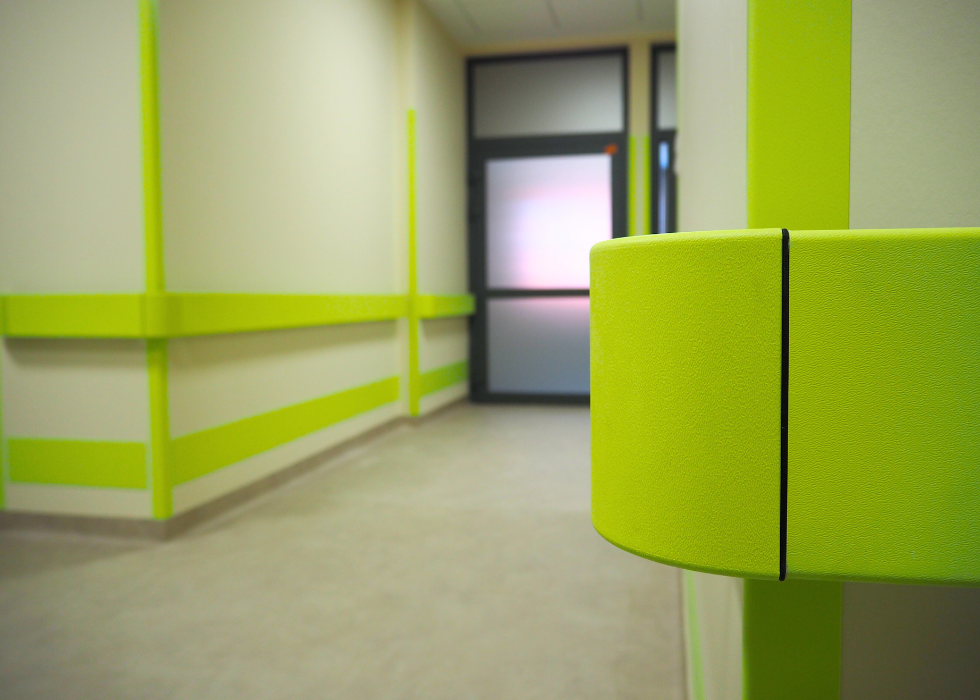
The shock-absorbing profile absorbs a portion of the impact energy, thereby reducing the risk of wall cracking or deformation. In this context, shock absorption means reducing the force transmitted directly to the wall structure. Installed at the height of trolley wheels and frames, these wall bumpers protect passageways against the formation of deep gouges and dents.
Wall guards come in several variants. Flat guards protect surfaces against scratches and dirt, but convex wall guards with a reinforcing core are the right choice for areas where walls are exposed to heavier impacts—such as from loaded pallet trucks or automated floor scrubbers. The aluminum core increases the distance between the guard and the wall, absorbing some of the impact energy before it reaches the structural wall itself.
Wall corner protectors
Building corners are more prone to damage than flat wall sections because the force of an impact is concentrated on the small surface area of the edge. Specially profiled corner guards absorb point impacts from pallets and transport trolleys, preventing tiles from chipping and plaster from crumbling.
Properly selected wall corner guards smooth the junction between surfaces, eliminating sharp angles where dirt and bacteria can accumulate. This facilitates cleaning and ensures continuous protection for vertical edges.
Wall-mounted handrails
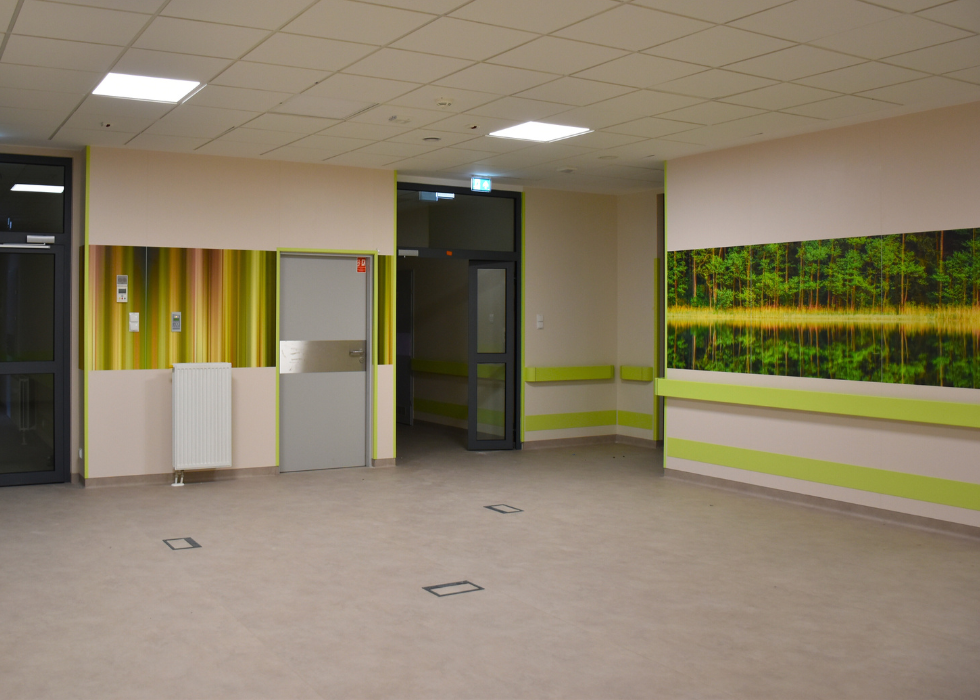
Pedestrian walkways and circulation areas in food processing plants can become wet and slippery due to cleaning processes. Smooth, durable wall-mounted handrails provide stable support for staff moving between areas. Their rounded shape and lack of sharp edges eliminate the risk of injury, while the smooth material withstands regular sanitization with alcohol- and chlorine-based agents.
Tailoring Polmar Profil protection systems to the specific needs of food processing plants
Meat, poultry, and fish processing plants
In meat processing facilities, walls are constantly exposed to animal fats, blood, and hot water mixed with detergents. Cleaning involves the use of strong alkaline and acidic agents. Thick wall protection panels with sealed edges, combined with heavy-duty impact guards, are effective in such areas. This system protects the walls against impacts from meat-filling trolleys weighing up to several hundred kilograms.
Dairies and cheese-making plants
Milk processing environments are characterized by the presence of lactic acid and high humidity. Protective installations must be completely chemically inert and resistant to biological corrosion. Wall protection systems featuring seals prevent whey and cleaning solutions from seeping beneath the protective profile.
Bakeries and pastry shops
Baking and dough preparation areas are characterized by the presence of flour dust and elevated temperatures. In maneuvering aisles, oven racks frequently bump against the walls. Durable wall corner guards protect pillar edges from impacts by hot transport racks. The smooth surface finish prevents dough from sticking and allows for easy dry and wet cleaning.
Cold storage and logistics areas
Working in sub-zero temperatures alters the mechanical properties of certain materials. The plastics used in Polmar Profil bumpers retain their flexibility at low temperatures, absorbing impacts from forklifts and pallet trucks in cold storage facilities. Narrow warehouse aisles require the installation of profiled components—such as protective corner guards—to safeguard cold-room door frames.
Overview of Polmar Profil protective solutions at the processing plant – comparison table
|
Facility Zone |
Dominant threat |
Recommended product: Polmar Profil |
Effect and practical benefit |
|
Pedestrian routes |
Slippery surfaces, trips |
wall-mounted handrails |
Safe worker support, easy decontamination |
|
Transport corridors |
Pallet truck impacts |
wall guards |
Dispersion of impact force, no dents in the wall |
|
Corners of piers and passageways |
Edge damage |
protective corner guards, wall corner guards |
Protection against plaster chipping and tile cracking |
|
Washing and packaging areas |
Moisture, cleaning chemicals |
protective wall panels |
Airtight hygienic barrier, rapid dirt removal |
|
Unloading ramps and raw material warehouse |
Heavy-duty forklifts, pallets |
Reinforced wall guards |
High impact energy absorption, protection against wall damage |
Summary
Ensuring microbiological cleanliness while maintaining the structural integrity of walls requires the use of specialized engineering solutions.
Polmar Profil protection systems safeguard building infrastructure against the damaging effects of mechanical impacts and aggressive cleaning agents. Minimizing the need for repairs and ensuring trouble-free operation facilitate smooth production processes and seamless sanitary audits.
Consult Polmar Profil on the selection of protective systems.
The choice of protective panels, bumpers, corner guards, and handrails depends on the specific characteristics of the area in question. Simply provide details regarding the type of room, traffic volume, and cleaning agents used, and you will receive a product proposal tailored to your facility's conditions. We invite you to contact us!
FAQ – Frequently Asked Questions about wall protection in the food and processing industries
What types of protection are suitable for wash-down and disinfection areas?
ACRAMIT materials and stainless steel are resistant to most cleaning agents. The manufacturer recommends mild detergents and advises against the use of chlorinated solvents, nitro compounds, and ketones.
What is the difference between a protective panel and a bumper strip?
A protective panel covers a large, flat section of the wall. A bumper strip protects a specific band at a height corresponding to the object most likely to strike the wall—such as the edge of a pallet truck.
Are the products certified for use in industrial buildings?
The ACRAMIT material holds a PZH hygienic certificate and a reaction-to-fire classification according to PN-EN 13501-1+A1:2010. It is advisable to verify the scope of the certification with the supplier regarding the specific application.
Do the corner pieces fit non-standard wall angles?
Yes, in addition to the fixed 90° version, an adjustable version is available for corners with non-standard angles.
 Polish
 German