


How can you reduce renovation costs with professional wall protection?
Managing a public-use building is a constant balancing act between a limited budget and the need to maintain the facility in proper technical and visual condition. Expense reports often overlook the hidden costs of wall maintenance — costs that heavily burden the budgets of those managing schools, hospitals, clinics, government offices, or care homes.
Table of Contents
-
Why do renovations in public buildings generate such high costs
-
Why do walls in public buildings deteriorate faster
-
Consequences of the problem: what costs are caused by unprotected walls
-
Prevention is cheaper than renovation
-
Professional wall protection systems for public buildings by Polmar Profil
-
Where do Polmar Profil solutions deliver the best results
-
Summary
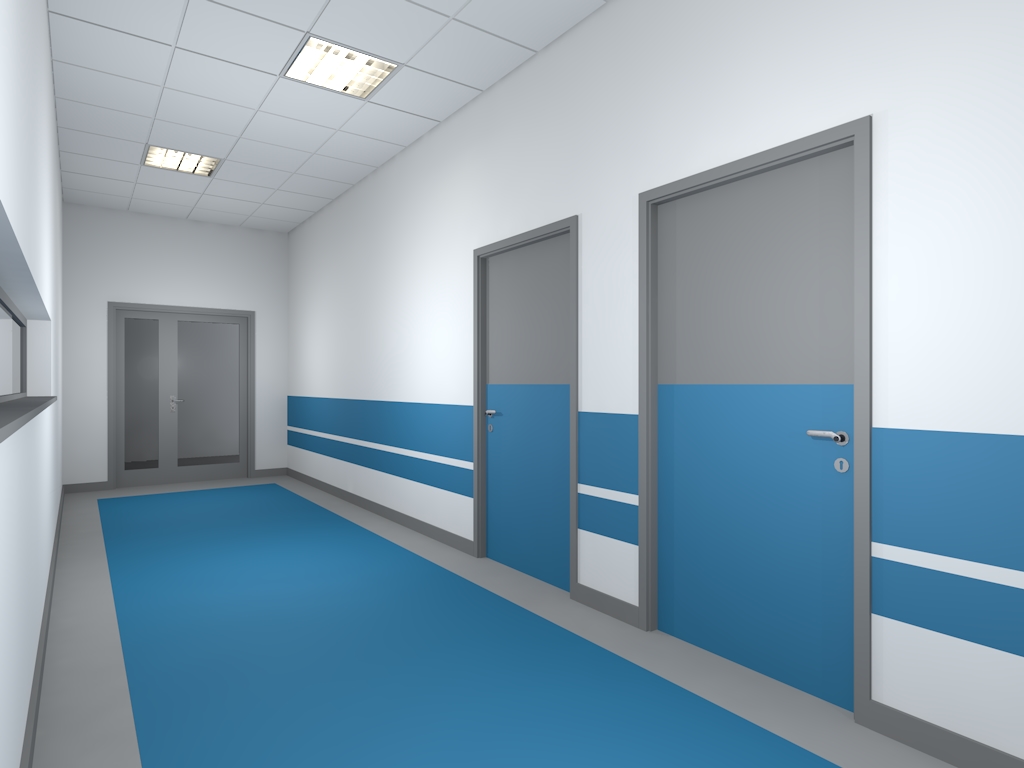
Why do renovations in public buildings generate such high costs?
Renovating public-use buildings places a significant burden on budgets. This is because corridors and communication routes in such facilities face intense daily foot and wheeled traffic (e.g., medical carts, transport trolleys), which means that walls, corners, and doors are constantly exposed to damage.
It is important to note that the highest cost does not always come from a single major renovation. The real financial challenge lies in the continuous minor repairs that accumulate into surprisingly high amounts. Even seemingly insignificant scratches, chips, or cracks in plaster—especially on corners—require regular interventions that are both time-consuming and expensive.
Without proper protection, the degradation of wall surfaces progresses relentlessly, forcing more frequent interior refreshes.
In addition to direct renovation expenses, damaged walls also generate indirect costs, such as disruptions to the facility’s daily operations.
Why do walls in public buildings deteriorate faster?
Public-use buildings operate under far more demanding conditions than residential facilities. The high intensity of both foot and wheeled traffic means that walls are exposed to heavy wear from the very beginning. It is also important to consider the unpredictable behaviour of patients, residents, or visitors, which can lead to accidents and additional damage.
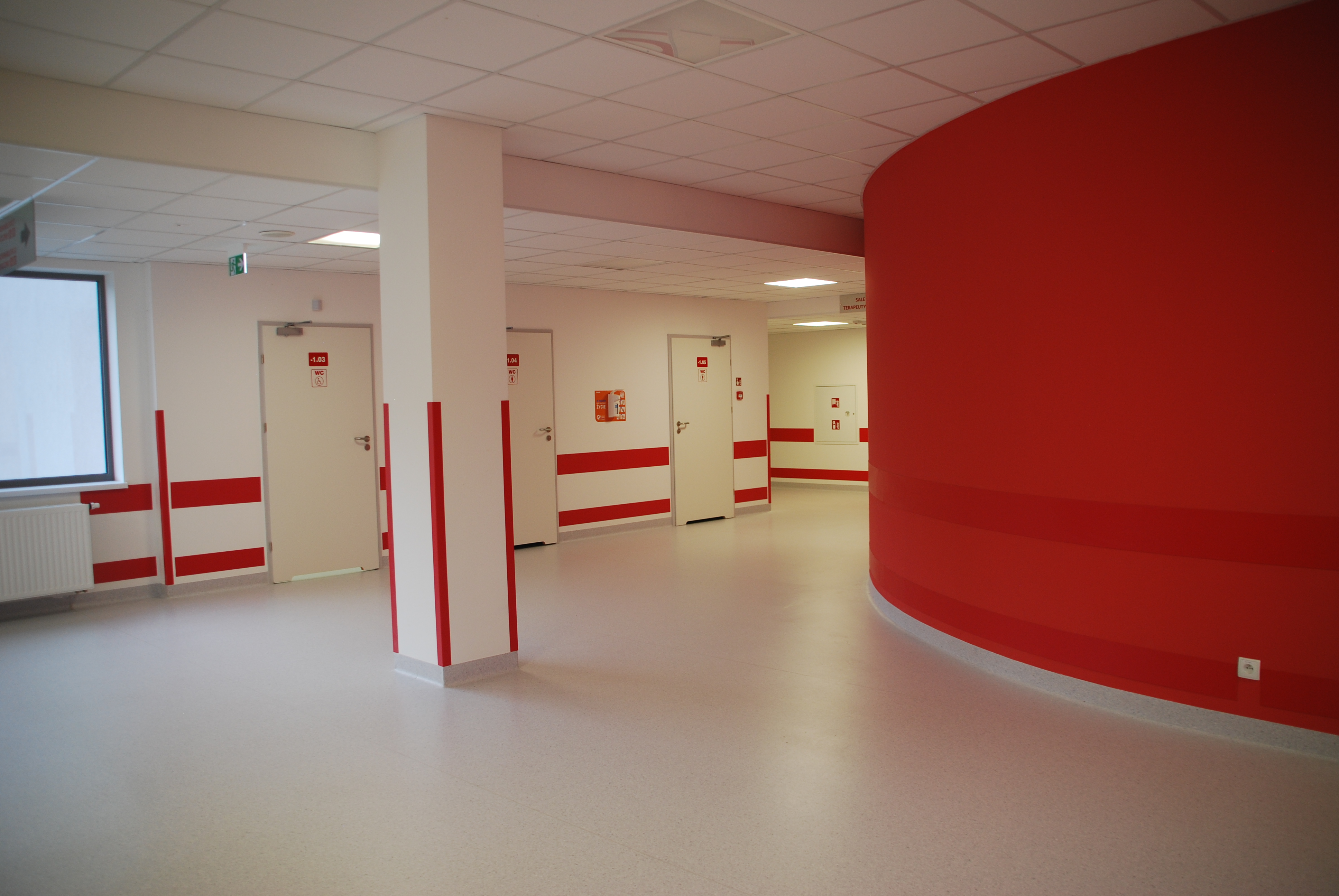
The main reasons for faster degradation of interior wall surfaces in public buildings:
Intensive contact with mobile equipment: In commercial and public facilities, walls are constantly exposed to impacts caused by transport trolleys, hospital beds, wheelchairs, and heavy technical equipment. Every movement of equipment carries a potential risk of collision.
Insufficient durability of standard finishes: Regular paint is not designed for such intensive use. Even the smallest scratch contributes to the gradual deterioration of the building’s interior.
Cleaning and hygiene requirements: Frequent washing and intensive disinfection—essential in hospitals and schools—accelerate the wear of traditional paint coatings, leading to dulling, fading, and peeling.
Which areas deteriorate the fastest?
The highest risk of damage concerns several key zones:
-
internal and external corners
-
walls near doors and elevators
-
corridors and communication routes
-
reception and waiting areas
-
the lower wall section near the floor
-
delivery, transport, and back‑of‑house zones
Consequences of the problem: what costs are caused by unprotected walls?
The greatest financial burden usually does not come from major failures but from the accumulation of small scratches and surface losses. Scratches, cracks, and dents appear regularly, and repairs must be carried out repeatedly. Costs increase due to the combined expense of labour, materials, and the organisational effort required to perform these fixes.
There are also indirect costs. Damaged walls negatively affect the facility’s image, make it difficult to maintain a clean and professional appearance, and can create the impression of a neglected environment. In hospitals, kindergartens, or care homes, the lack of corner protection also increases the risk of injuries among patients or residents and makes it harder to maintain appropriate safety standards.
|
Type of service |
Estimated cost |
|
Minor wall repairs (spot repairs) |
approx. 12–13 zł/m² |
|
Comprehensive plastering |
over 60–70 zł/m² |
|
Double surface skim coating |
from approx. 50 zł/m² |
|
Repair of losses and deep cracks |
approx. 74 zł/RM |
|
Painting (labour only) |
from several to several dozen zł/m² |
Table. Estimated costs of repairing damaged walls in public buildings — the assumed repair prices are calculated per square meter or per linear meter of surface.
Prevention is cheaper than renovation
Why is prevention more cost‑effective than constant repairs? The traditional approach follows the cycle: damage → quick fix → repeated damage. This vicious circle generates endless expenses.
A far more reasonable solution is to protect high‑risk zones, thereby reducing the number of necessary renovations.
Investing in wall protection is not an additional cost — it is a method of reducing operational expenses. Well‑selected protection systems often pay for themselves within 1–2 years, as they eliminate recurring repairs, reduce the consumption of finishing materials, and ease the workload of technical staff. In the long term, this translates into real savings and more efficient use of the facility’s budget.
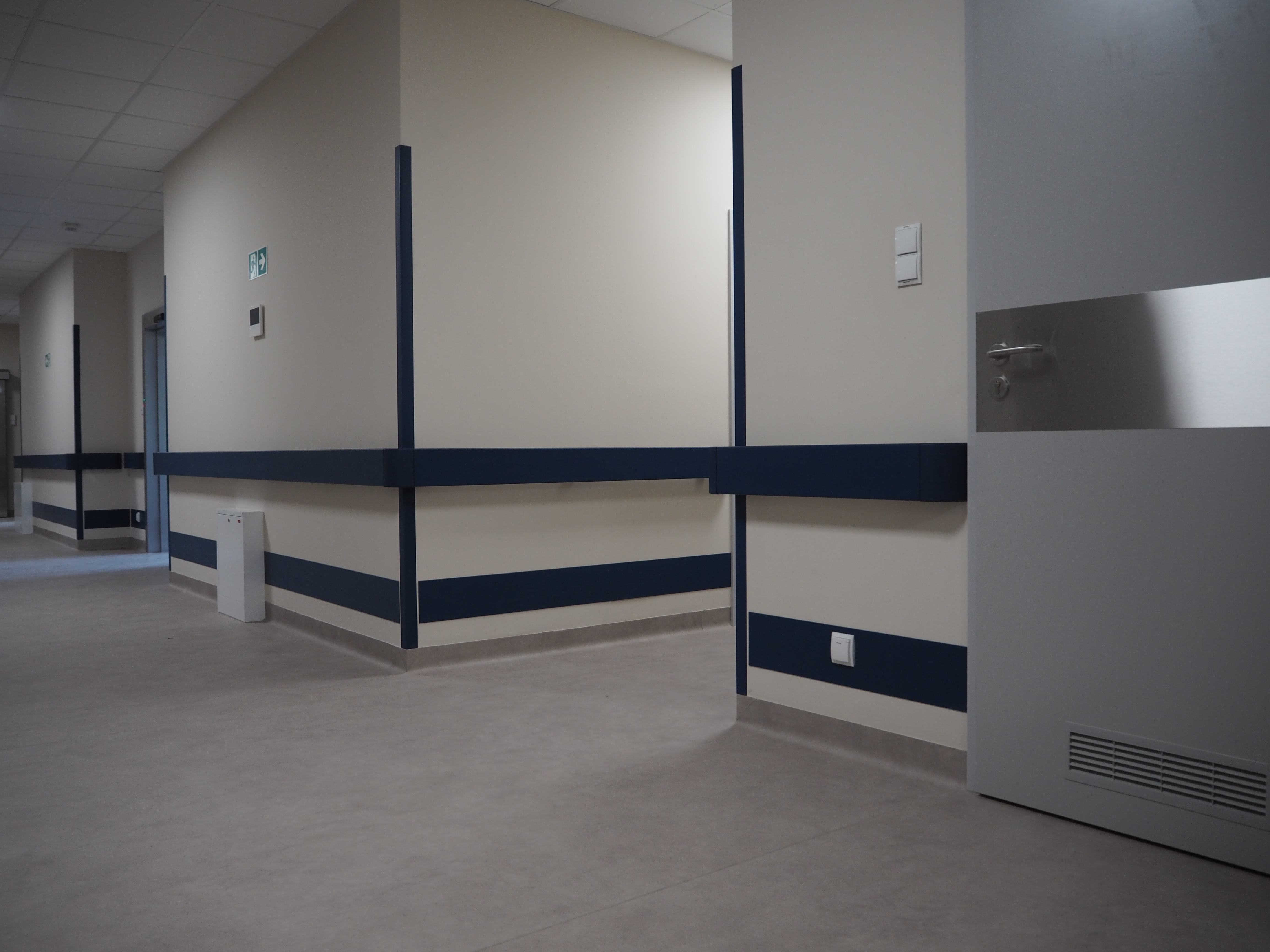
Professional wall protection for public buildings by Polmar Profil
We offer comprehensive system solutions that absorb impact energy and protect wall surfaces, eliminating unwanted chips and dents.
Protective corner guards: They protect the most exposed parts of walls. They are essential in communication routes and at entrances, where collisions with trolleys occur daily. Durable wall corners made of PVC or stainless steel form the foundation of protection in any corridor.
Wall protection panels: They allow large flat surfaces to be secured. These wall panels are ideal for hospitals and schools, helping maintain clean walls and protecting them from scratches.
Flexible wall guards: Installed at the height where impacts occur most frequently (e.g., at chair‑back level or the height of trolley wheels). Flexible wall guards effectively reduce the risk of damage along long wall sections by absorbing the force of impact.
Where do Polmar Profil solutions deliver the best results?
The higher the intensity of building use, the faster the return on investment in protective systems. We particularly recommend our wall‑protection products for:
-
hospitals and medical clinics (protection against beds and medical trolleys)
-
schools and kindergartens (resistance to heavy everyday use by children)
-
government offices and administrative buildings (maintaining a representative appearance)
-
care homes (safety and durability)
-
sports and technical facilities
An additional benefit is improved hygiene. Professional wall protection panels have smooth, chemically resistant surfaces, making disinfection and cleaning easier — a key requirement in facilities with elevated sanitary standards.
Summary
Repeated minor wall damages generate additional, ongoing costs. To avoid them, it is worth using Polmar Profil’s innovative wall‑protection products. Contact us — we will analyse the areas most exposed to damage and help you create a reliable wall‑protection system tailored to your facility.
 Polish
 German