


Safe Corner Protection for Children – How to Reduce the Impact of Collisions with Wall Edges in Nurseries and Playrooms?
A collision with a hard, sharp wall edge can lead to painful injuries, bruises, and even cuts to a child's skin. At the same time, it generates ongoing costs associated with repairing and repainting chipped plaster.
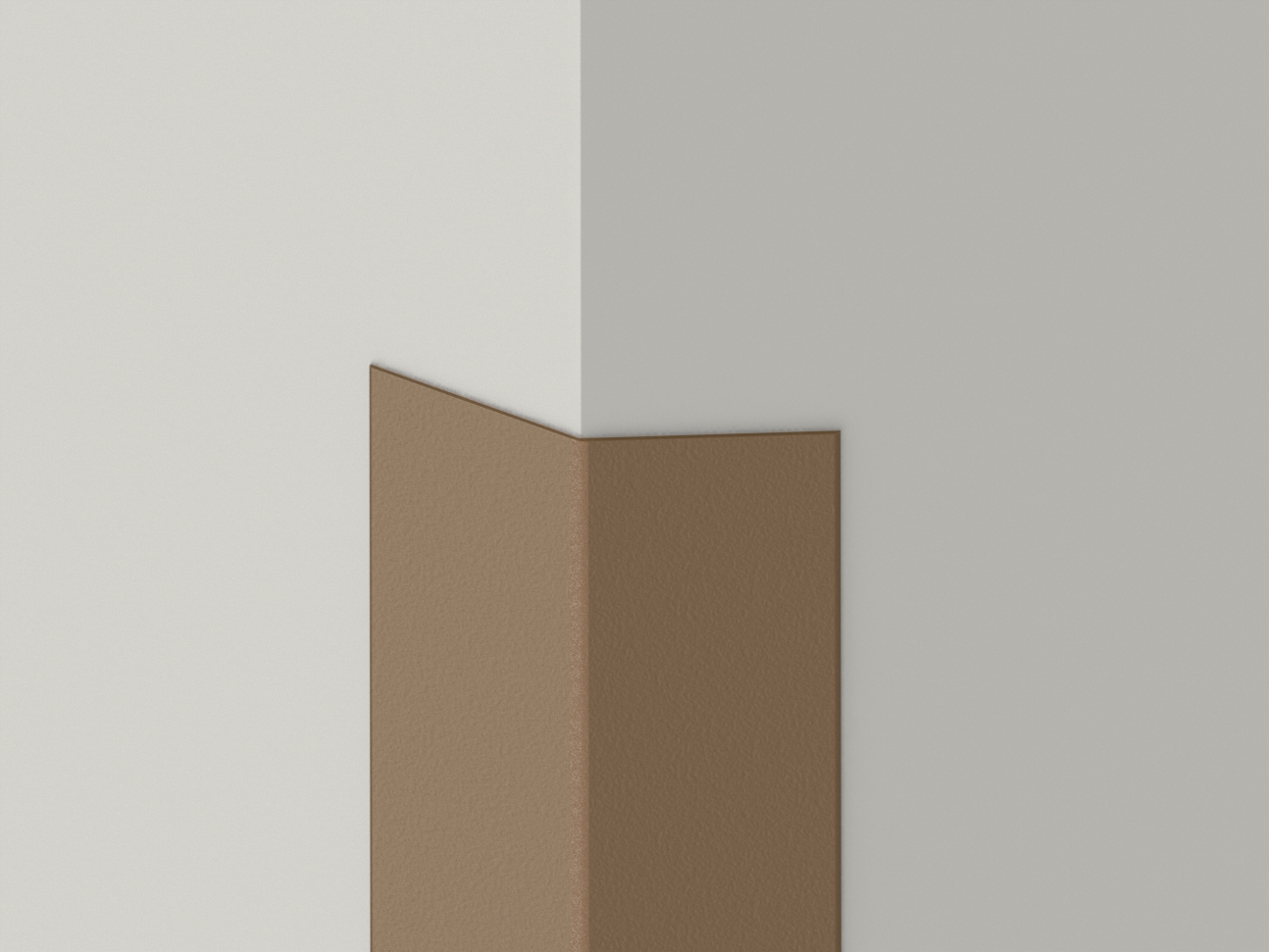
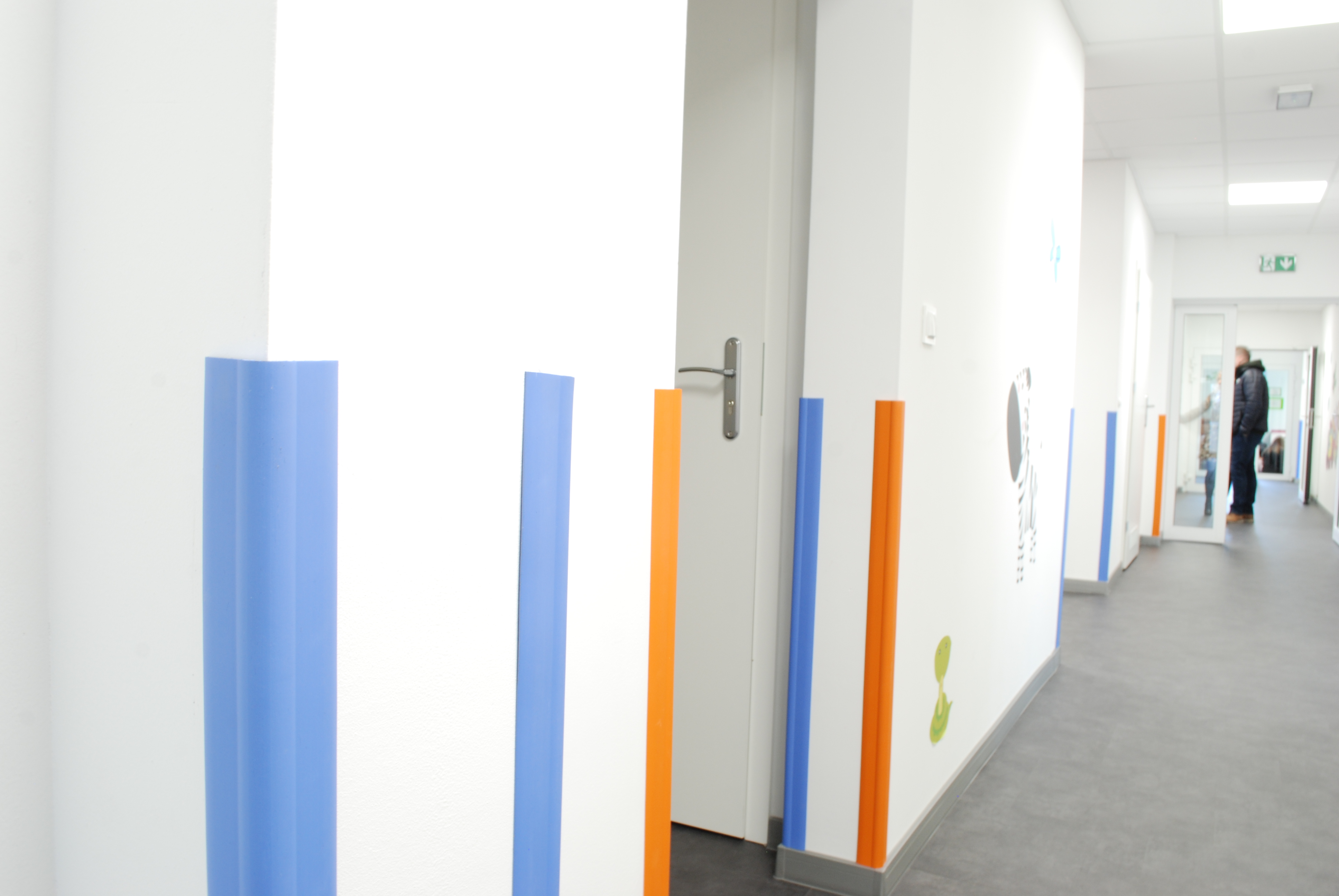
A wall corner protector is a profile that covers the vertical edge and the adjacent sections of both walls. Its rounded surface separates the child from the sharp corner apex. In addition, the flexible material can help cushion impacts by deforming under pressure.
- Where can children hit a wall edge?
- Why is hitting a wall corner more dangerous than colliding with a flat wall?
- How does a flexible corner protector cushion an impact?
- At what height should corner protectors for children be installed?
- How do you choose the right corner protector for a nursery or playroom?
- Frequently Asked Questions – Corner Protection in Nurseries and Playrooms
Sharp corners are not limited to the external corners of rooms. During facility renovations, door reveals and service enclosures are often overlooked, even though these are areas that children pass dozens of times each day. Before purchasing corner protection, it is worth walking through the facility with a measuring tape and making a list of:
- room and corridor corners, especially near entrances where children tend to turn while running
- door reveals without full door-frame coverings, for example between a classroom and a sleeping area or bathroom,
- drywall enclosures for utility shafts and service risers,
- pillars and columns located in open play areas,
- recesses for shelves, cabinets, and radiators,
- corners in cloakrooms/changing areas, where morning traffic is at its busiest,
- corners in bathrooms, where wet floors increase the risk of slipping.
Commercial indoor playgrounds present an additional challenge because older children run faster, while columns are often located in open spaces. School corridors pose a different risk due to heavy traffic during breaks.
See how to protect corridors in schools and kindergartens to provide safe circulation routes for young children.
The force of an impact is distributed across the contact area. A flat wall absorbs the impact over a broad surface, whereas a 90-degree corner concentrates the same force along a narrow line. As a result, the pressure exerted on the skin increases significantly, which is why collisions with corners often lead to cuts around the eyebrow area rather than just bumps or bruises.
The hardness of the surface also plays an important role. Plaster, drywall, and ceramic finishes do not deform upon impact, meaning that the head decelerates within a fraction of a second. The shorter the deceleration time, the greater the peak force. The way to reduce this effect is through impact cushioning: decreasing the force transferred to the head by allowing the protective material to deform. This deformation extends the collision time and increases the contact area.
Young children have proportionally larger heads relative to their bodies and are less able to brace themselves with their hands when they fall. Tripping is a natural part of learning to walk. Corner protection helps reduce the consequences of potential impacts.
When a person comes into contact with a sharp edge, pressure is concentrated on a very small area. A rounded corner protector changes the shape of the surface that a child comes into contact with. An elastomer, a material capable of elastic deformation, bends under pressure. Therefore, the shape of the protector and the flexibility of the material are responsible for two different protective effects.
Stress Concentration
When an impact occurs against a sharp edge, all of the impact energy is transferred to a very narrow, localized area of tissue, creating extremely high pressure at the point of contact (impact force divided by a minimal contact area). This can result in immediate skin laceration and damage to soft tissue.
Rounded Geometry
The specially designed rounded shape of the wall protector converts a point impact into a surface impact. By increasing the contact area between the body and the obstacle, the same impact force is distributed across a much larger area of tissue. As a result, localized stress is reduced to a level that is considerably safer for a child.
For a protruding 90° corner near the entrance to a room, the FAT flexible corner protector can be used. Its thickness is 4 mm, and the 50 × 50 mm wings protect the wall surface on both sides of the corner. A factory-applied adhesive tape allows the profile to be installed without drilling. Before placing an order, hold a sample against the wall to ensure that both wings sit flush along the entire intended installation area.
The protected zone along a wall edge should not be determined arbitrarily. Its height must be based directly on children's anatomy, movement ergonomics, and the dynamics of play for the relevant age group. A properly designed protection zone that minimizes the risk of injury should meet the following technical and installation requirements:
-
Lower limit of the protection zone (starting point): Corner protection should begin directly at floor level or from the upper edge of the skirting board. This ensures continuous protection in the area where crawling infants and toddlers learning to walk move close to the floor and are most vulnerable to head impacts during falls.
-
Upper limit of the protection zone (installation height): The top edge of the profile should extend significantly above the height of the tallest children in the group. During active play, running, or jumping, a child's head and center of gravity are positioned higher than when standing still. A safety margin of at least 20-30 cm should therefore be added to the maximum child height to account for jumping and raised arms.
WHO Growth Charts as a Reference Point
When selecting the installation height of corner protection profiles (for example, lengths of 1000 mm, 1500 mm, or 2000 mm), it is advisable to use the 97th percentile values from the World Health Organization (WHO) growth charts for the relevant age group:
-
Nurseries (children aged 0-3 years): According to WHO standards, the 97th percentile height of a 3-year-old child is approximately 102 cm. After adding a safety margin for jumping and movement on low platforms, the minimum protection height should be 130-140 cm above the floor. In practice, 1500 mm profiles installed from floor level are considered the optimal solution.
-
Kindergartens and playrooms (children aged 3-6 years): The 97th percentile height for a 6-year-old child is approximately 125 cm. Including a safety margin for jumping and activity on play equipment, the protected zone should extend to at least 150-160 cm above the floor. 1500 mm or 2000 mm profiles are generally recommended.
| Children's Age | Height (WHO median) | FAT Profile Length |
|---|---|---|
| 1-3 years (nursery) | approx. 75-96 cm | 1000 mm |
| 3-6 years (kindergarten, playroom) | approx. 96-116 cm | 1500 mm |
Before selecting wall corner protectors, determine who or what is most likely to hit the area in question. Then assess the corner geometry and the extent of potential contact. Along children's traffic routes, the priority should be protecting the sharp edge itself. In areas where carts, strollers, or other wheeled equipment are frequently moved, the flat wall surface may also require protection.
A shock-absorbing corner protector is an angled profile made of flexible material that is attached along the wall edge. Under pressure, it flexes and distributes the impact force over a larger area instead of concentrating it on the sharp corner line. Its primary purpose is to protect the person who collides with the corner, while also helping to protect the wall surface and plaster from damage.
| Location | Polmar Profil Solution | How Does the Protection Work? |
|---|---|---|
| Sharp 90° corner within children's reach | FAT. Self-adhesive elastomer profile, 50 × 50 mm wings, 4 mm thick. | The rounded shape covers the sharp corner apex, while the material deforms under pressure to help cushion impacts. |
| Existing rounded corner exposed to scuffs and dirt | AcraMit with rounded profile. Rigid PVC profile with acrylic coating, 2 mm thick, e.g. 65 × 65 mm. Installed using adhesive tape or glue. | The rounded center conforms to the curved corner. The protective cladding shields the wall finish from scuffs and wear. |
| Corner exposed to equipment traffic, e.g. in service areas | Fixed 90° AcraMit or adjustable AcraMit for non-standard angles. For more frequent or heavier impacts, consider a reinforced ALU or PLAST corner protector. | The AcraMit profile protects the plaster. In reinforced versions, the cladding is supported by a mechanically fixed aluminium or PVC core. |
| Flat wall exposed to wheels, trolley handles, or furniture | AcraMit Sheet or AcraMit Super Sheet for larger wall areas. Flat AcraMit bumper, 2 mm or 2.5 mm thick, for protection at a specific height. | The cladding absorbs scuffs and impacts from equipment. In the Super version, a higher concentration of acrylic near the surface provides increased scratch resistance. |
In the passage leading to the cloakroom, a child may brush against a vertical corner edge, while a stroller may repeatedly strike the adjacent wall. In such a situation, a flexible corner protector can safeguard the corner within children's reach, while the section exposed to wheels or handles can be protected with wall protection sheets.
When combining both types of protection, make sure that their edges do not protrude and that there are no gaps between them.
If similar marks caused by strollers or carts appear in several rooms, include these locations in the facility's overall wall protection plan. Mark vertical edges and the height of impact marks on flat wall sections in the building layout. This will make it easier to determine where a narrow wall guard is sufficient and where a protective sheet should cover a larger surface area.
 Polish
 German