


Handrails and Crash Rails in Medical and Long-Term Care Facilities – Safety and Hygiene
Table of Contents
- Why are walls in hospitals and medical facilities particularly prone to damage?
- Crash rails – wall protection and patient support
- Polmar Profil handrails – comfortable movement in corridors
- Polmar Profil handrails and crash rails – key advantages
- Support for people with reduced mobility
Why Are Walls in Hospitals and Medical Facilities Particularly Prone to Damage?
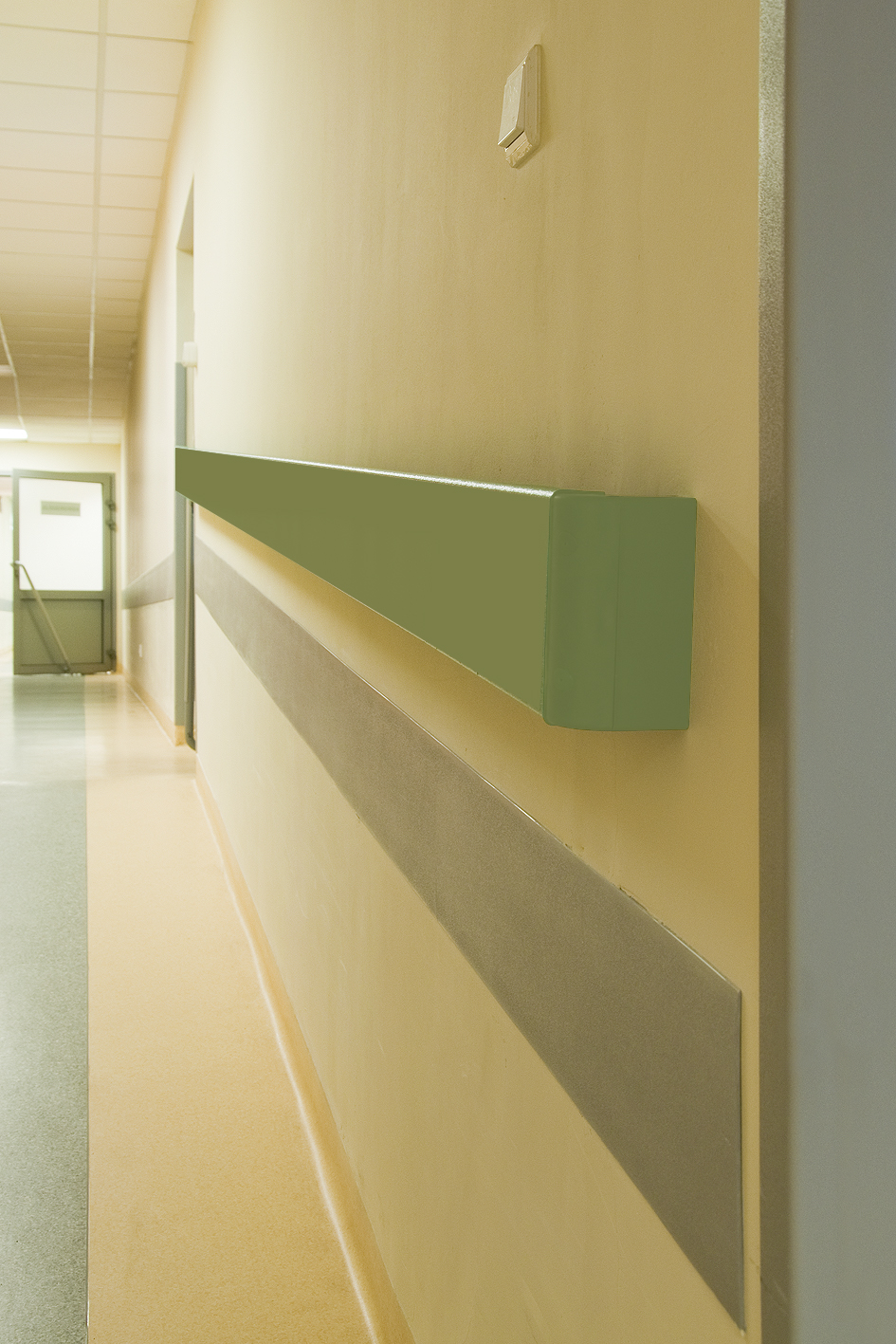
In public-use facilities, traffic intensity is significantly higher than in residential buildings. Every day, dozens or even hundreds of people move through corridors—patients, staff, and suppliers—which naturally increases the risk of accidental impacts, corner damage, and permanent mechanical wear.
In hospitals and medical facilities, this risk is even greater. Corridors are used to transport hospital beds, wheelchairs, patient trolleys, diagnostic equipment, and cleaning service carts. This often happens under time pressure, especially in emergency situations where every second counts. In such conditions, collisions between equipment and walls are difficult to avoid—particularly at corners, near elevator doors, in narrow passages, or at room entrances.
An additional factor is the unpredictable behavior of patients—those who are weakened, post-surgery, elderly, or experiencing balance or orientation issues. Patients may stumble, push off walls, or lean on furniture or medical equipment, which can result in scratches, dents, or cracks in wall surfaces.
For this reason, modern healthcare facilities require comprehensive protective solutions.
Such a solution is provided by Polmar Profil handrails and crash rails—designed specifically for hospitals, clinics, nursing homes, and other facilities where durability, safety, and hygiene are critical.
Crash Rails – Wall Protection and Patient Support
Specialized Polmar Profil crash rails serve two key functions. Firstly, they effectively protect walls from mechanical damage caused by impacts from carts, beds, chairs, and other transport equipment. Secondly, they provide stable support for patients, helping them move safely along corridors.
Crash rails are installed at heights most exposed to contact with mobile equipment, forming a continuous protective line that absorbs impact energy before it reaches the wall surface. Thanks to their engineered design, crash rails act as shock absorbers—impact force is absorbed and dissipated, leaving the wall surface intact or minimally affected.
At the same time, their ergonomic profile allows patients to grip them securely and use them for support while walking. This is especially important for elderly individuals, post-operative patients, and those with reduced mobility or balance issues.
Polmar Profil Handrails – Comfortable Movement in Corridors
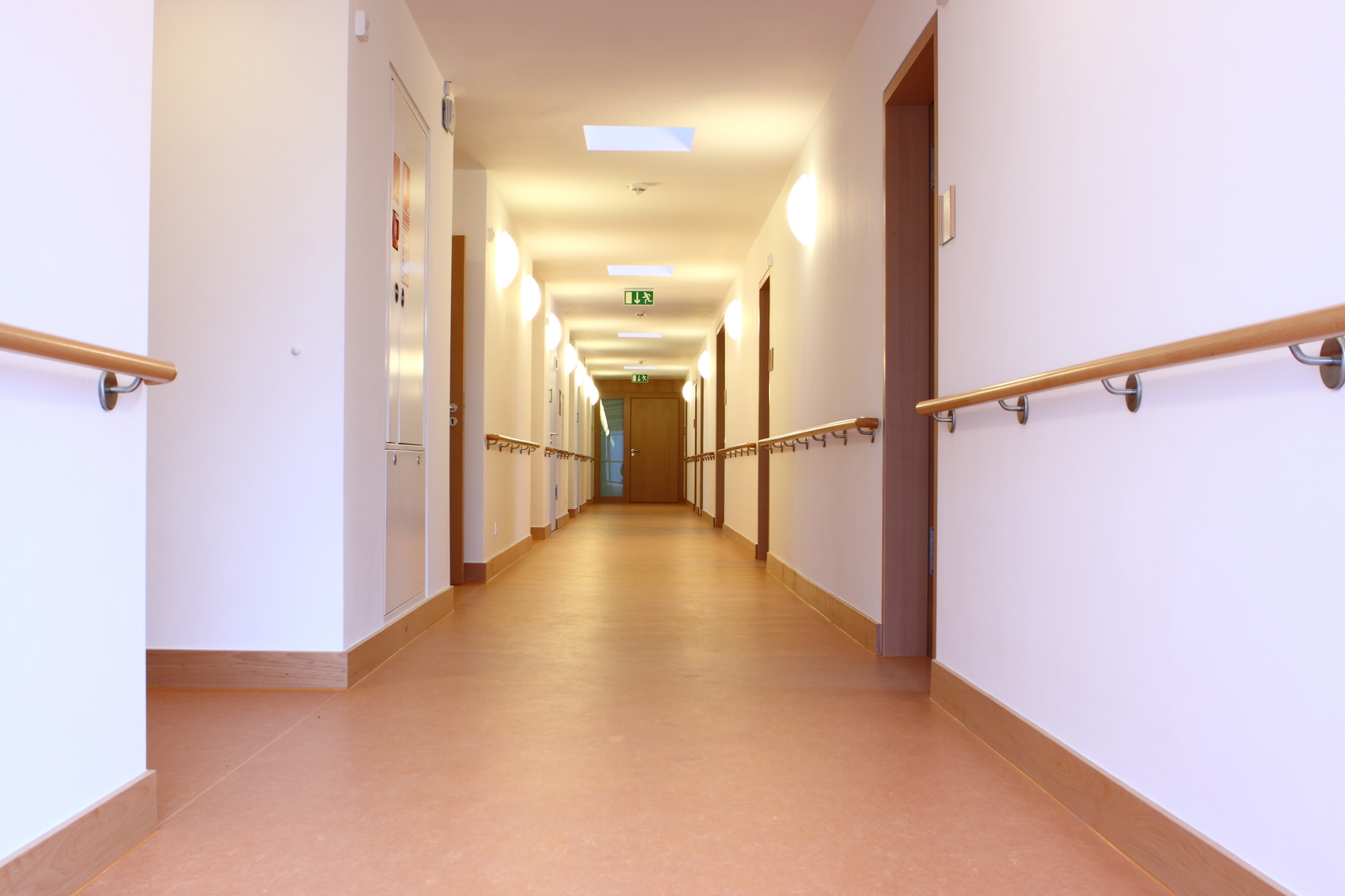
Polmar Profil wall-mounted handrails are designed to facilitate easy and safe movement along corridors. Their ergonomic shape allows patients to comfortably grasp the handrail, providing stable support.
This increases the sense of security and reduces the risk of trips and falls, particularly among patients recovering from orthopedic, neurological, or cardiac procedures.
Polmar Profil Handrails and Crash Rails – Key Advantages
- Wide range of color options – available in multiple colors to match interior design and ward identification; color schemes can also influence patient comfort (e.g., calming tones or high-contrast elements for visually impaired users)
- Quick and easy installation with anchors – the mounting system allows efficient installation and easy replacement, minimizing disruption to facility operations
- Easy-to-clean surface – smooth, non-porous surfaces support daily disinfection and hygiene maintenance; resistant to aggressive cleaning agents
- Enhanced impact absorption – combining an aluminum core with ACRAMIT cladding (durable PVC material) ensures high impact resistance and long service life
Support for People with Reduced Mobility
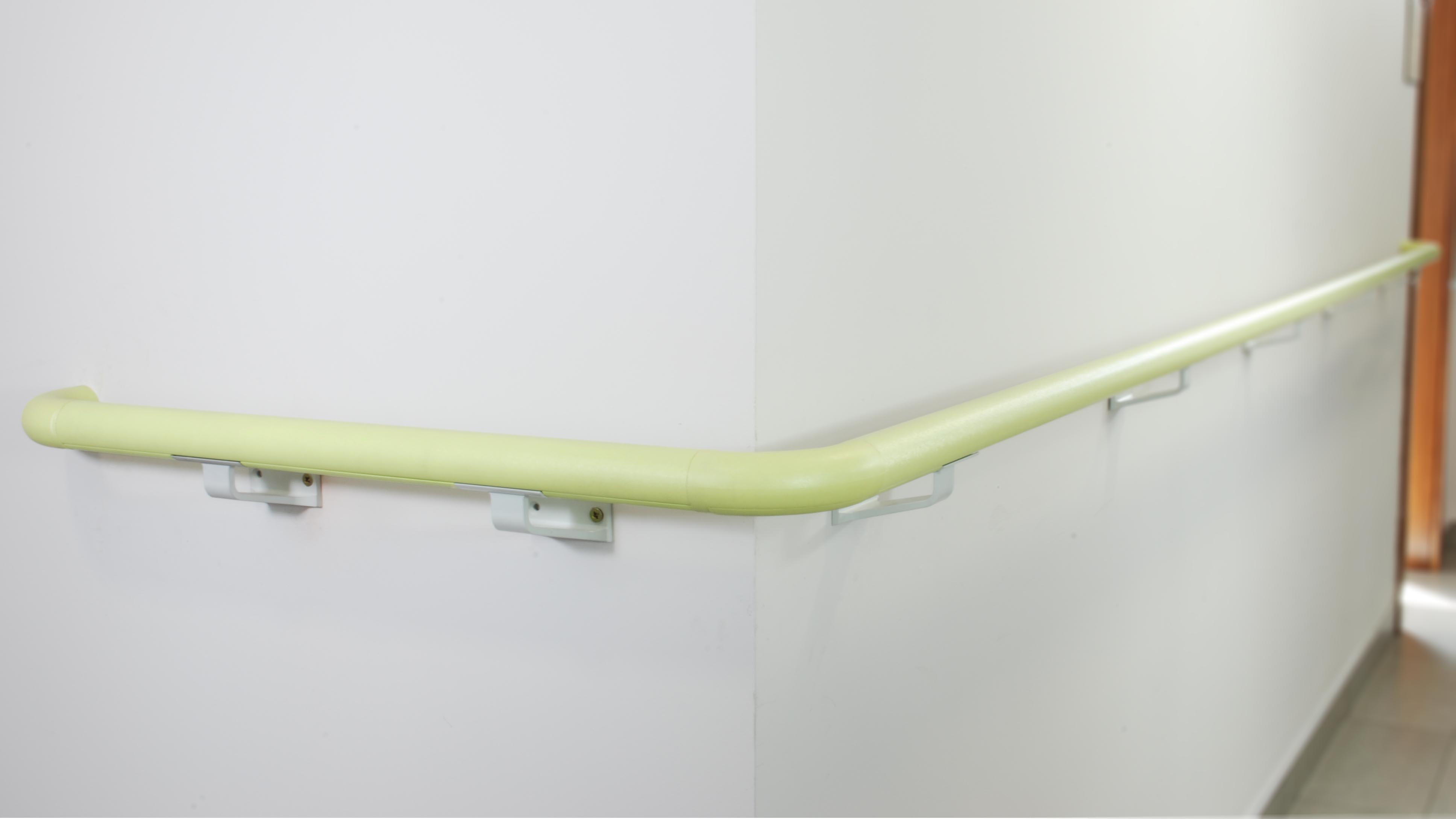
Our handrails are designed to reduce architectural barriers faced daily by people with limited mobility. In hospitals, nursing homes, and long-term care facilities, patients often struggle with long corridors, slopes, thresholds, and level differences.
Common architectural barriers include:
- long, monotonous corridors without support points
- narrow passages and turns
- floor level differences, thresholds, and small steps
- entrances to bathrooms without handrails
The lack of proper support points can lead to falls, injuries, and reduced independence. Polmar Profil handrails provide patients with a safe path of movement.
This is particularly important for individuals using crutches, walkers, or for elderly people, for whom additional balance support significantly increases confidence and safety.
Safety, hygiene, and durability of wall finishes are now standards expected by both patients and medical staff. Polmar Profil handrails and crash rails help meet these requirements.
Explore the full range of Polmar Profil protective solutions for hospitals and medical facilities and contact us via the website form.
 Polish
 German