


How to protect walls from floor cleaning machines: protective panels, corner guards, and wall bumpers.
An automatic floor scrubber operating in a narrow warehouse aisle, a shopping mall, or a multi-level car park traverses the same route dozens of times a day. The machine’s bumper, side skirt, and brush housing frequently scrape against the lower sections of walls and corners, leaving behind scratches, chips, and stubborn marks.
Wall guards, corner guards, and wall protection panels minimize damage at the points where the machine most frequently comes into contact with the wall, resulting in less frequent repairs and reduced facility downtime.
Table of Contents
The scale of the problem: why do floor scrubbers damage walls?
How to identify the contact zone between the wall and the floor scrubber?
The environmental aspect: increased consumption of chemicals and materials due to damaged surfaces
Business consequences: repair costs and downtime
How do systematic protection solutions safeguard walls against floor scrubbers?
Wall guards in the machine contact zone
Corner guards at critical points
Wall protection panels in the contact zone
Table – comparison of Polmar Profil protection products regarding protection against automatic floor scrubbers
Why is it worth it? System-based protection against automatic floor scrubbers
Application of Polmar Profil protection components
How to select the right wall protection products for a facility?
The scale of the problem: why do automatic floor scrubbers damage walls?
Modern, high-performance cleaning machines—ranging from walk-behind units to advanced ride-on scrubbers—form the backbone of systematic cleaning operations in large-scale facilities.
Equipped with heavy batteries and filled water tanks, these machines can weigh anywhere from several hundred kilograms to over a ton, generating immense kinetic energy while in motion.
Narrow corridors, tight warehouse aisles, checkout areas in shopping malls, and turns in multi-level parking garages are locations where the risk of collision is significantly elevated. Common types of damage include deep scratches on the lower sections of walls caused by protruding squeegees, chipped plaster on corners resulting from overly tight turning radii, and structural dents caused by machine bumpers.
An additional issue is the constant soiling of walls caused by the splashing of contaminated water and aggressive cleaning solutions thrown off by rotating disc brushes.
How is the contact zone between the wall and the cleaning machine defined?
The area of the wall surface most susceptible to damage is the vertical strip located immediately above the floor (typically extending up to a height of 40 cm). Due to the technical specifications and dimensions of cleaning machines, this area is constantly exposed to repeated mechanical impacts and friction, as well as damaging contact with moisture and industrial chemicals.
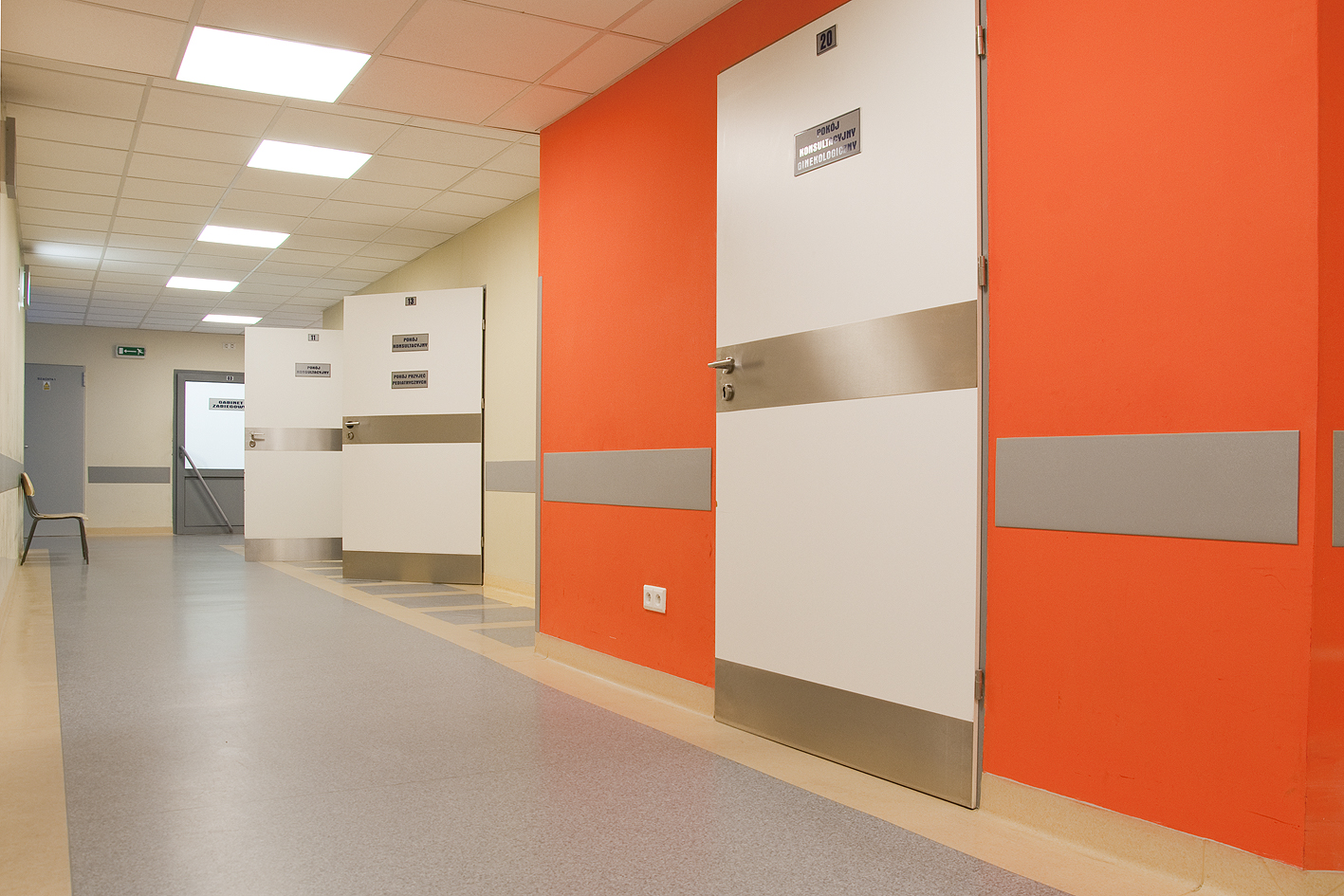
Environmental aspect: increased consumption of chemicals and materials due to damaged surfaces
Maintaining cleanliness in large-scale facilities entails meeting rigorous environmental standards. Damaged wall structures—and the subsequent process of refurbishing those surfaces—directly increase the facility's overall carbon and chemical footprint.
According to official research reports published by CIRI (Cleaning Industry Research Institute), deep-cleaning surfaces with micro-damage, cracks, or dents requires 30% to 40% more professional cleaning agents and more frequent scrubbing cycles compared to smooth, undamaged surfaces.
Hard-to-remove bacterial biofilms and accumulated dirt build up in these crevices; standard suction systems on automatic cleaning machines cannot effectively remove them in a single pass. Higher chemical consumption automatically leads to increased pollutant discharge into wastewater and places a greater burden on the environment.
More frequent painting and the replacement of damaged wall coverings result in additional consumption of building materials and increased renovation waste. For facilities committed to managing their environmental impact, limiting the frequency of wall refurbishments is significant for reasons that go well beyond mere maintenance budgets.
Business consequences: repair costs and downtime
Porous, damaged surfaces in areas where automatic floor scrubbers operate become a constant source of re-soiling. Dust from crumbling plaster or concrete settles on the cleaned floor, necessitating repeated use of the scrubbers and incurring additional staff labor hours.
Reactive maintenance—regularly calling in repair crews to fix damaged plaster—is financially inefficient compared to a one-time investment in protective systems.
However, the most significant costs stem from operational downtime. Repair work requires taking specific traffic routes out of service. Closing a section of a hospital corridor, blocking an aisle in a logistics center, or shutting down a racking zone in a warehouse while mortars and paints dry causes tangible logistical delays and losses—all of which are entirely avoidable.
How do system safeguards protect walls from automatic cleaning machines?
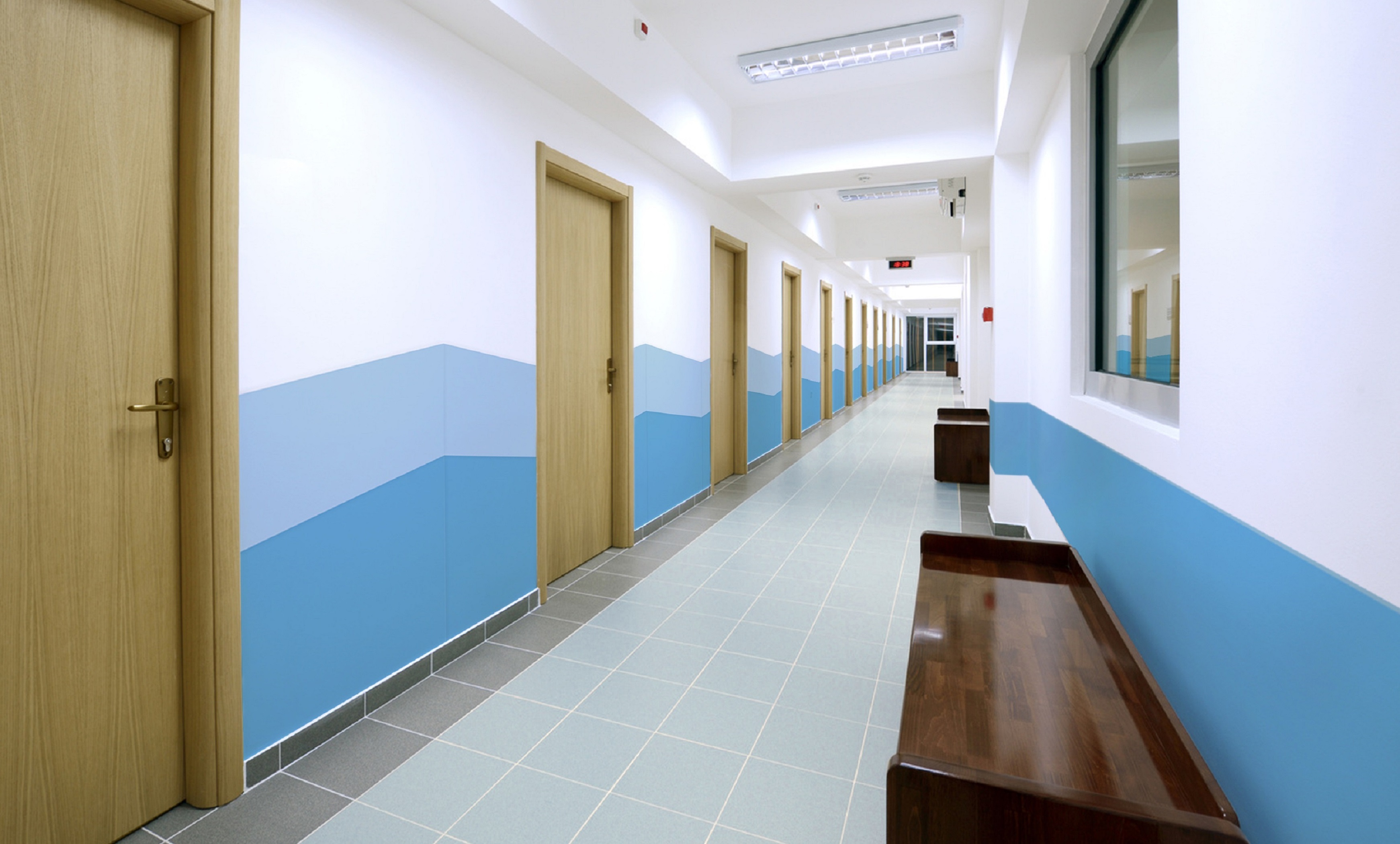
Wall guards for machine contact zones
Effectively protecting long stretches of corridors requires solutions with superior impact resistance. The STRONG wall guard combines an ACRAMIT facing with an aluminum reinforcing core that runs the entire length of the profile.
The aluminum core absorbs impact energy across the profile's full width, preventing the force from being concentrated on a single point of the wall facing; this minimizes the risk of dents and cracks at the point of contact.
Installing the STRONG wall guard at the height of cleaning machine bumpers completely eliminates the risk of damage. In areas with lower traffic intensity or specific hygiene requirements, flat wall guards or stainless steel options may serve as alternatives.
Wall corner guards for vulnerable areas
The edges of walls and structural pillars are the points most susceptible to damage. This is due to the turning mechanics of cleaning machines; when maneuvering to turn around or navigate a bend in a narrow corridor, the rear section of the machine’s frame swings wide, striking the corner. The force of the impact is concentrated on a very small surface area, causing immediate plaster chipping.
A steel corner guard protects the edge against chipping while simultaneously masking corner irregularities—a particularly useful feature in older buildings with irregular wall geometry.
In cases where the corner angle deviates from the standard 90 degrees, the Acramit adjustable corner guard with a rounded profile is a better solution; it adapts to any non-standard angle and is suitable for corners with rounded edges.
Wall protection panels for the contact zone
In facilities where automatic washing systems operate in extremely close proximity to walls along their entire length—and where potential hazards (brushes, splash guards, bumpers) are located at varying heights—linear protection may prove insufficient. In such cases, large-format wall protection panels offer the best barrier.
ACRAMIT and ACRAMIT SUPER panels are manufactured in thicknesses ranging from 1 to 4 mm. They feature exceptional mechanical resistance to scratching and dulling, as well as complete resistance to the chemical compounds found in detergents. The SUPER version features a unique, higher concentration of acrylic at the outer surface.
The panels form a continuous, smooth protective barrier covering a significant portion of the wall's height.
Table – comparison of Polmar Profil protection products regarding protection against floor cleaning machines
Product
|
Protection area
|
Typical installation location
|
Material |
|
STRONG |
Linear protection against
|
Lower wall section, at the height
|
ACRAMIT® material +
|
|
Odbojnica flat / steel |
Linear protection against
|
Lower or middle section,
|
PVC / Sainless steel |
Steel / flexible FAT /
|
Point protection for vertical
|
External wall corners,
|
Stainless steel 304L /
|
|
Pamel ACRAMIT / ACRAMIT SUPER |
Broad-area surface protection
|
Lower and middle wall sections
|
PVC-acrylic composite
|
Why is it a worthwhile investment? System-based protection against floor cleaning machines
Approvals and certificates: All products hold official hygienic certifications from the National Institute of Public Health (PZH), ensuring their safe use in facilities with strict sanitary requirements. Additionally, these systems are classified for reaction to fire in accordance with the European standard PN-EN 13501-1, confirming compliance with fire safety regulations for evacuation routes.
Implementation conditions: We provide a 12-month warranty against material defects. Factory cutting to exact dimensions is available, minimizing labor and waste during on-site installation.
For the protection systems to function effectively, the substrate must be properly prepared: it must be load-bearing, level, dry, and thoroughly cleared of dust. When installing long, continuous runs of bumper rails or plastic panels, it is essential to include expansion joints to accommodate the material's linear thermal expansion.
The effectiveness of the protection also depends on a proper inventory of the machinery fleet and the installation of components at a height that precisely aligns with the equipment's critical points.
Application of Polmar Profil protective components
Polmar Profil protection systems are highly versatile. The same wall buffers, corner guards, and wall protection panels used to shield infrastructure from floor-cleaning machines are equally effective in production halls and facilities serving a wide range of purposes:
Shopping centers and hypermarkets: protection against impacts from shopping carts and mobile merchandise trolleys.
Warehouses and logistics centers: protection against heavy traffic from manual and electric pallet trucks.
Hospitals, clinics, and laboratories: protection for corridor walls against impacts from medical beds, stretchers, and carts carrying diagnostic equipment.
Schools and public facilities: protection against mechanical damage caused by heavy pedestrian traffic and service carts.
How do you select the right wall protection products for a facility?
Before deciding to purchase a protection system, it is advisable to conduct a technical audit of the facility using the following checklist:
Corridor width and traffic routes: Does the facility have any narrow sections or sharp turns where the rear of a floor scrubber could swing out and strike walls or corners?
Machine geometry (determining the contact zone): What are the exact heights of the structural bumpers and side squeegees on the specific machine models used (e.g., Hako, Comac, Fimap)? The mounting height of the wall guards must be adjusted to match these dimensions.
Intensity of hygiene processes: Will the walls be subjected to daily, aggressive chemical washing and disinfection? If so, the ACRAMIT® SUPER wall panel is the optimal choice.
Wall construction and substrate type: Are the walls made of concrete, silicate blocks, or plasterboard? Stud walls (plasterboard) absolutely require impact protection using wall guards with an aluminum core (STRONG).
Facility regulations and requirements: Does the nature of the building (e.g., hospital, food processing plant, evacuation route) require a PZH hygiene certificate and a specific fire resistance class (PN-EN 13501-1)
Market experience shows that correctly selecting the mounting height and matching the protective profile type to the technical specifications of a specific fleet of automatic cleaning machines helps reduce facility maintenance costs and the consumption of cleaning chemicals.
We invite you to contact our technical department to prepare a customized solution specification for your facility.
 Polish
 German