


Impact zone audit – how to effectively secure elevator entrances, lobbies, and narrow transport passageways
Lobbies and circulation areas form natural traffic routes in most public, commercial, and medical facilities—such as hotels, hospitals, office buildings, and shopping malls.
Damage to door frames and corners typically occurs during the routine maneuvering of transport and service equipment. Areas in front of elevator doors are particularly vulnerable.
It is precisely in these spots that service carts, linen trolleys, heavy suitcases, café carts, and hospital beds undergo sharp turns, evasive maneuvers, and sudden braking.
Protruding frame edges, hard-shell suitcases, and equipment wheels strike door frames and corners, causing plaster chips, cracks in drywall, and deep scratches.
Lobbies and circulation areas form natural traffic routes in most public, commercial, and medical facilities - such as hotels, hospitals, office buildings, and shopping malls.
Damage to door frames and corners typically occurs during routine maneuvering of transport and service equipment. Areas in front of elevator doors are particularly vulnerable.
It is precisely in these spots that service carts, linen trolleys, heavy suitcases, café carts, and hospital beds undergo sharp turns, evasive maneuvers, and sudden braking.
Protruding frame edges, hard-shell suitcases, and equipment wheels strike door frames and corners, causing plaster chips, drywall cracks, and deep scratches.
An impact zone audit makes it possible to identify where equipment makes contact with walls, the height at which damage occurs, and which protective solutions best suit the specific conditions of a given location.
- Why do walls near elevators, in lobbies, and in passageways get damaged?
- What does an impact zone audit entail?
- How can elevator entrances be protected?
- How do you select wall protection for a lobby?
- What can be used to protect narrow transport corridors?
- What should be checked after installing protective systems?
- Benefits of the Polmar Profil system that aren't immediately obvious
- Frequently asked questions
Why do walls near elevators, in lobbies, and in passageways deteriorate?
In most buildings, wall damage is not the result of extreme vandalism but rather a natural consequence of everyday use. The most common causes of damage in these high-traffic areas include:
-
Impacts from carts and equipment: Movement of pallet jacks, warehouse trolleys, café carts, luggage, and hospital beds.
-
Cramped spaces and maneuvering constraints: Bottlenecks where passing carts necessitate maneuvering close to wall edges and door frames.
-
Scuffing and surface marks: Constant foot traffic, leaning against walls, or the transport of bulky loads.
Elevator entrance
Entering an elevator involves several challenging maneuvers: stopping, positioning the trolley in front of the doors, turning, and passing through a narrow opening. During these actions, the wheels, trolley frame, or protruding loads can strike corners and scrape against the flat wall sections beside the doors.
Lobbies and entrance areas
In the lobby, damage occurs both along traffic routes and in areas where trolleys, deliveries, or cleaning equipment are parked.
Narrow transport corridors
Maneuvering space is limited in narrow corridors; consequently, repeated passage and the need to pass other traffic leave marks along long stretches of wall.
In back-of-house areas and corridors leading to the warehouse, pallet trucks make 90-degree turns right next to door frames. When loaded, they weigh significantly more than hospital trolleys, resulting in greater impact force. Such an impact causes drywall to crack, requiring the replacement of the damaged section.
Negative consequences of damage in circulation areas:
- Degradation of the facility's aesthetics and image: Scuffed corners, chipped door reveals, and soiled walls create an impression of neglect and lower the building's standard.
- Increased ongoing costs: The need for constant, cyclical filling, painting, and replacement of damaged drywall panels.
- Safety risks for users: Flaking plaster, exposed sharp profile edges, and damaged wall finishes pose a risk of injury or damage to clothing and luggage.
- Difficulties in maintaining cleanliness and sanitary standards: Rough, cracked walls and surface defects accumulate dirt and bacteria. In medical facilities, cracked plaster absorbs moisture and is difficult to disinfect effectively.
Hidden costs are less obvious:
- repairs take an area out of service that often serves as the sole route for vertical transport.
- crews work at night or on weekends because the facility cannot halt operations.
- falling plaster fragments and sharp edges pose a danger to users.
What does an impact zone audit entail?
An audit of impact zones within a building is a comprehensive analysis of pedestrian and transport routes regarding the risk of mechanical damage. It enables the identification of so-called "hot spots" (areas with the highest risk of damage) and the determination of the magnitude and characteristics of the loads occurring there.
Conducting an effective audit involves four key steps:
- Identification of traffic routes and flow patterns: Determining who moves through the space and by what means (pedestrian traffic, light cart traffic, heavy wheeled transport).
- Analysis of geometry and maneuverability at potential collision points:
- Elevator areas: Require special protection due to tight turns and the maneuvering of luggage or deliveries.
- Corridors and lobbies: Areas where people and carts pass one another.
- Narrow passages: Zones highly susceptible to constant side-impact scraping.
- Measurement of impact heights: A crucial step to prevent installation errors. The heights of cart frames, wheels, and handles must be measured precisely to ensure profiles are installed exactly along the line of impact.
- Verification of specific requirements: Determining needs regarding disinfection, chemical resistance, or fire reaction class (e.g., PN-EN 13501-1+A1:2010 for public facilities).
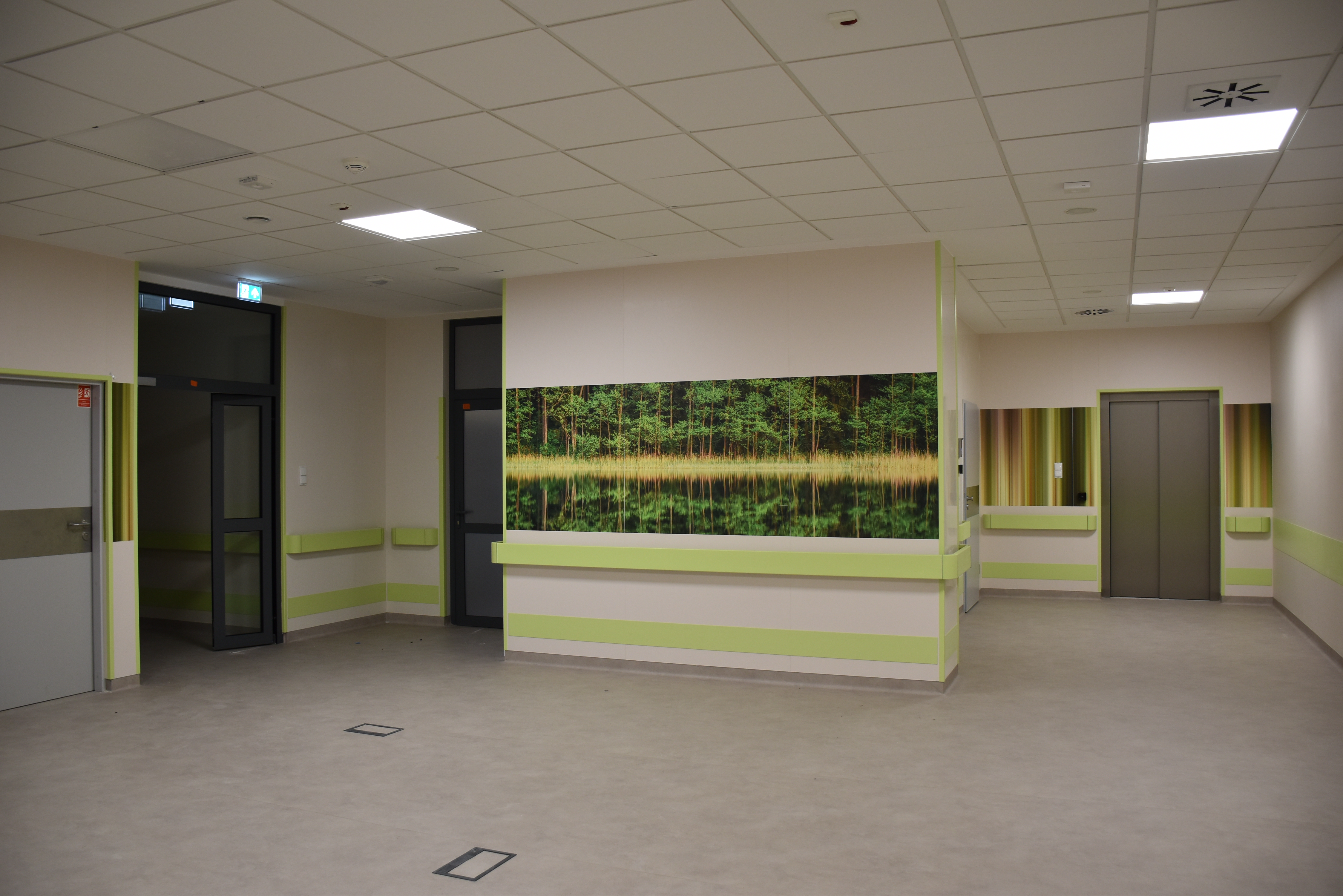
How can the elevator entrance be protected?
At the elevator, separately inspect the corners on both sides of the entrance and the flat surfaces that equipment scrapes against when being positioned for entry.
For edges prone to frequent impact, a reinforced corner guard—featuring an aluminum or PVC core with an Acramit facing—can be used to shield the wall section most vulnerable to damage.
For minor scuffs on 90° corners, a flat Acramit corner guard is suitable; for non-standard angles or rounded edges, an adjustable, radiused option is worth considering.
Flat wall sections beside the doors can be protected with an Acramit Optima or Super bumper strip at the height where repeated contact occurs, while a protective sheet should be used if scuff marks are spread over a larger area.
Protection measures must be planned so as not to obstruct the elevator doors or restrict necessary maneuvering space.
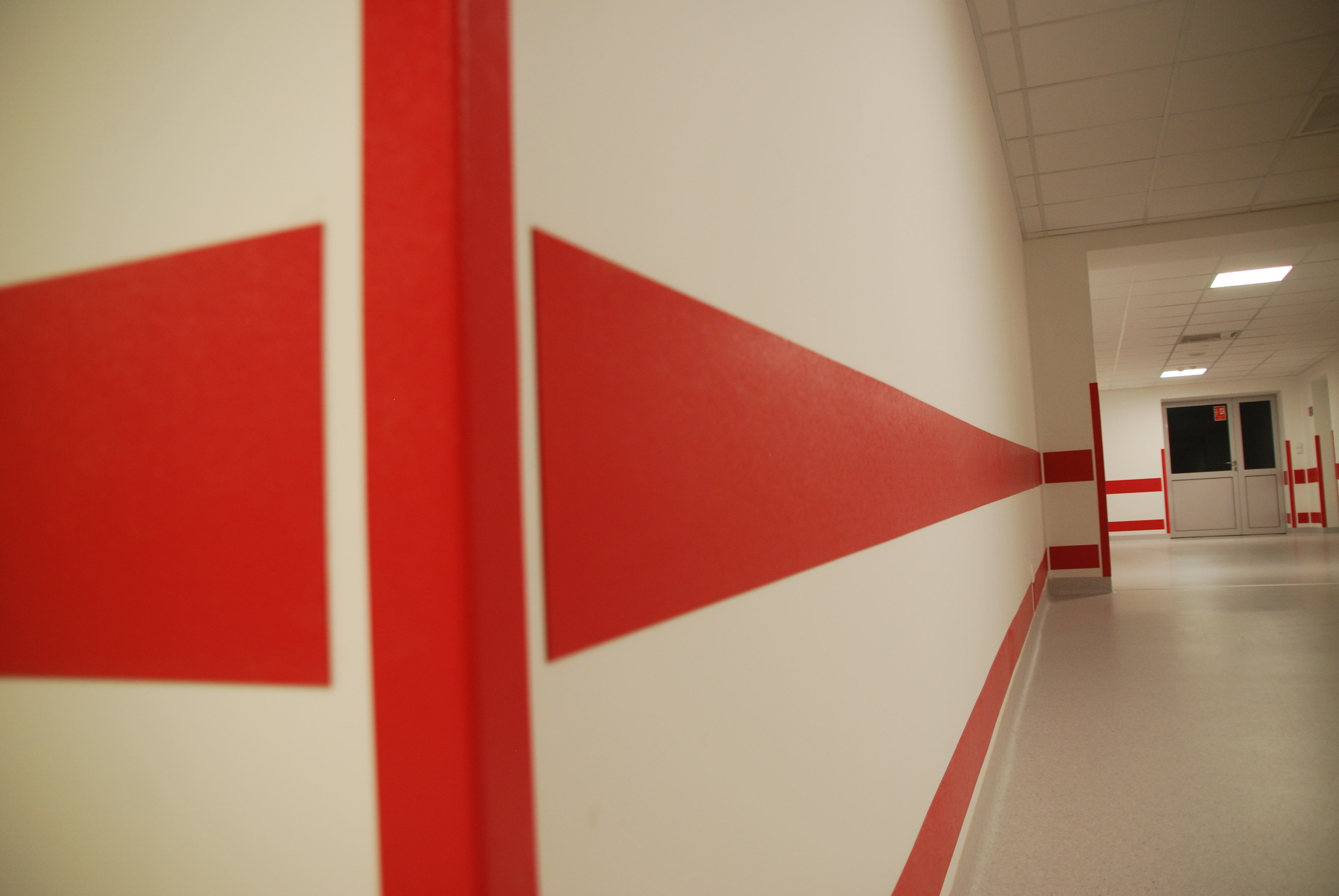
How do you choose the right wall protection for a lobby?
A single protective strip is not always sufficient in a lobby, as suitcases, carts, furniture, and service equipment can come into contact with the wall at various heights.
In areas prone to scattered scratches and scuffs, Acramit or Acramit Super protective panels cover a larger surface area, making it easier to keep the wall in good condition.
If damage tends to occur along a specific line, the Bridge wall guard is a suitable choice; its curved cover provides standard impact protection and can be easily removed for cleaning or replacement.
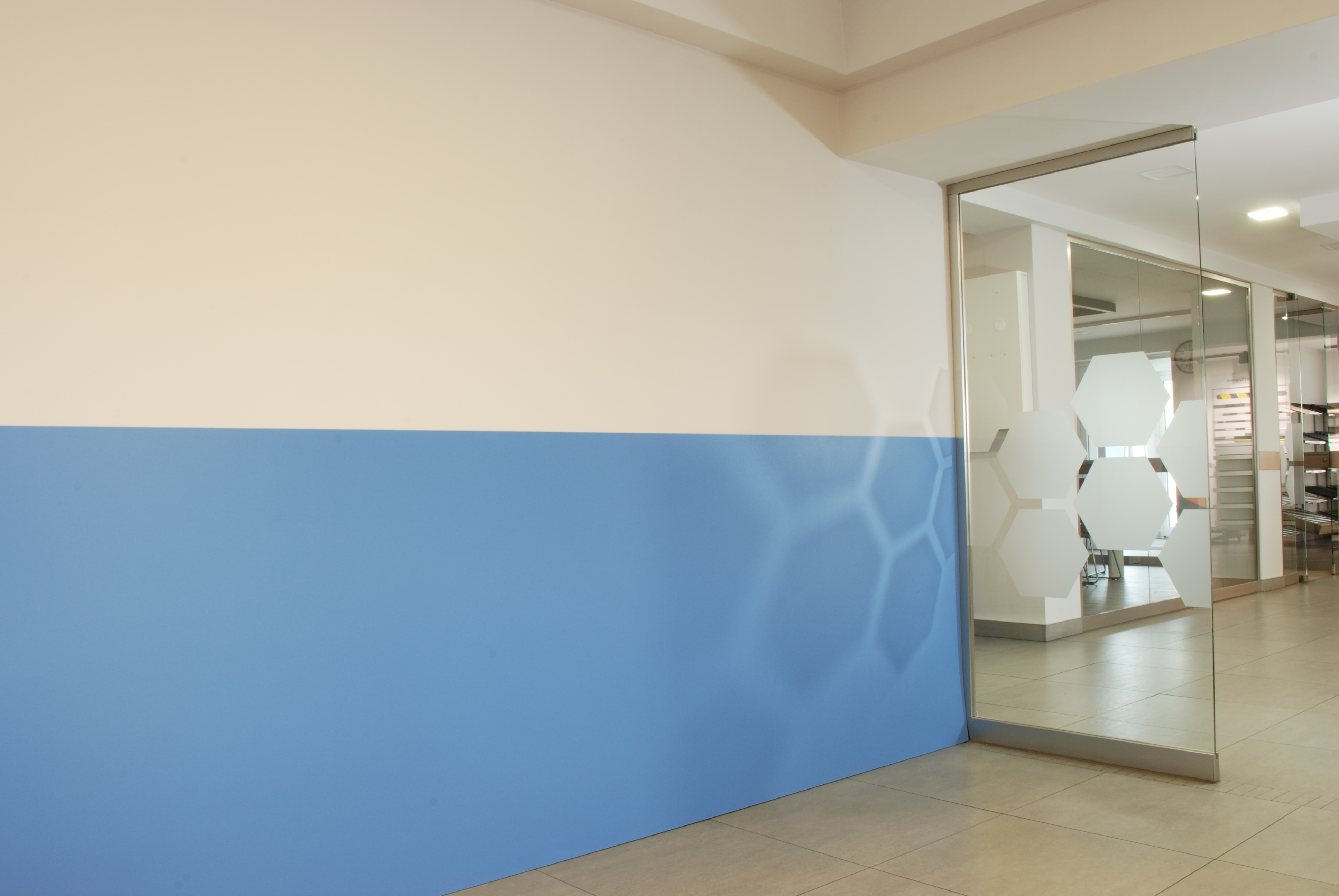
How can a narrow transport passageway be protected?
In the constricted area, check whether impact marks appear along the entire length of the wall, at the bend, or only near the edge of the opening.
To withstand stronger impacts from transport trucks, a STRONG bumper - featuring an aluminum core and a built-in shock absorber—can be installed at the height determined during the site audit.
Corners at the entrance can be fitted with a reinforced version, while larger areas prone to scuffing can be shielded with Acramit Super panels.
For curved or uneven walls where installing a rigid guard is difficult, a flexible, self-adhesive FLAT bumper is a solution worth considering.
The thickness of the chosen profiles is critical in tight spaces; therefore, before installation, it is essential to re-verify the usable width of the passageway and ensure that equipment can still be transported freely.
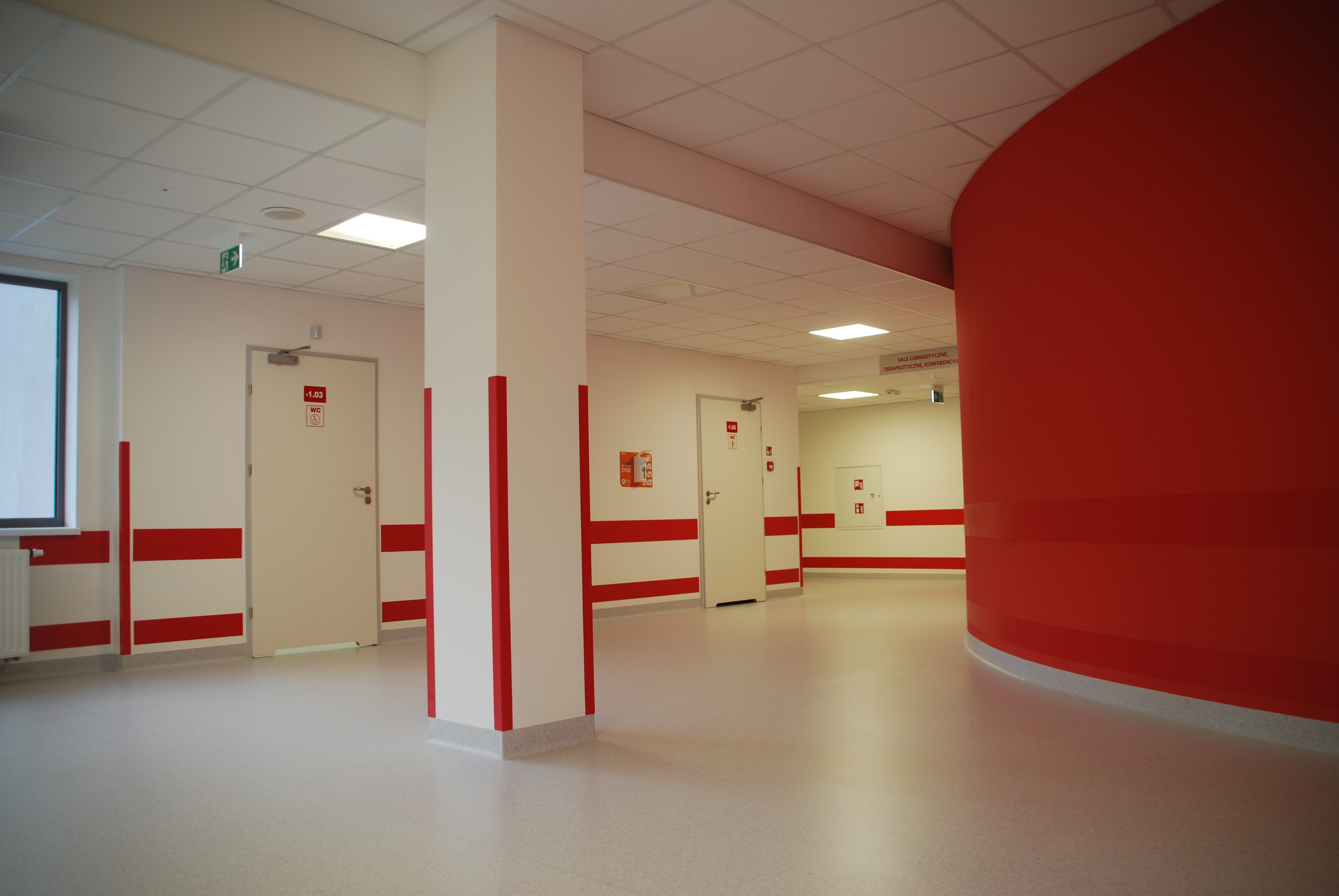
What should be checked after installing protective systems?
After a period of use, compare any new marks with the documentation created during the initial audit.
Check whether vehicles are still striking the protected zone and ensure that impacts have not shifted to an unprotected section of the wall or an adjacent corner. When evaluating the results, also consider ease of cleaning, the condition of the wall coverings, and the number of collisions where adverse consequences were averted thanks to the protective elements.
A well-chosen protection system reduces renovation costs, helps maintain the interior's aesthetic appeal, and minimizes the need for maintenance work in high-traffic areas of the building.
|
Area requiring protection |
Recommended Polmar Profil products |
Benefits |
|---|---|---|
|
Elevator entrance |
Aluminum or plastic reinforced corner guards for impact-prone edges; Acramit corner guards for minor scuffs; Acramit adjustable rounded corner guards for non-standard angles; Acramit Optima or Super flat wall guards for walls adjacent to doors. |
Protection of door reveals against chipping and walls against scuffing during trolley maneuvering; less frequent repairs at elevator entrances. |
|
Hall |
Acramit or Acramit Super protective panels for larger surface areas; Bridge bumper for the zone subject to repeated impacts. |
Fewer scratches and stains on exposed walls; easier cleaning and the option to replace the Bridge cladding without refurbishing the entire wall. |
|
Narrow transport passageway |
STRONG bumper for heavy impacts; reinforced corner guard; Acramit Super panel for protection against large-area abrasion; flexible FLAT bumper for curved or uneven walls. |
Less damage from carts and repetitive abrasion; corner protection on curves and the ability to |
Benefits of system protection from Polmar Profil that are not immediately apparent
Investing in custom-fitted wall protection panels, impact guards, and corner guards delivers tangible economic and organizational benefits:
-
Reduced maintenance and refurbishment costs: A one-time installation of flexible bumpers or profiles eliminates the need for ongoing painting and plastering expenses.
-
Hassle-free, clean installation: Polmar Profil products are installed using high-performance adhesive tapes, mounting adhesives, or specialized snap-on systems with wall anchors—without the need to close off corridors or passageways.
-
High hygiene standards and easy cleaning: PVC, Acramit, and stainless steel materials are resistant to disinfectants and mild detergents. The mass-pigmented materials are free from heavy metals and lead.
-
Wide color palette: Products are available in a rich range of colors (with the option of an NCS palette for larger orders), allowing the protective elements to be matched to the interior design.
Match protection to actual impact points
Have you conducted an impact zone audit and noticed damage near the elevator, in the lobby, or in a narrow transport aisle?
Check out Polmar Profil’s protective products, designed to safeguard walls and corners against future impacts.
Contact us, and our experts will help select the right protective measures based on the type of damage, the equipment used, and the layout of your facility.
Frequently Asked Questions
At what height should the bumper near the elevator be installed?
At the height of the part that most frequently strikes the wall, determined by measurement. For beds and low carts, it is better to use two strips or a panel.
Can the entire elevator lobby area be clad with panels?
Only up to 50% of the room's total surface area, in accordance with PZH certification requirements.
How can a round column in the lobby be protected?
The flexible FLAT bumper conforms to the curve and is adhered directly to the column.
How should panels and bumpers be cleaned and maintained in facilities with strict sanitary requirements (e.g., hospitals)?
Surfaces made of Acramit or stainless steel are smooth and non-absorbent. They can be easily washed and disinfected using standard cleaning agents and disinfectants used in medical facilities, without the risk of material damage or discoloration.
Which option works better in a narrow warehouse passageway—a flexible bumper or a reinforced version?
In areas exposed to heavy impacts from heavy carts (e.g., pallet trucks), the STRONG bumper—featuring an aluminum core and a shock-absorbing element—works best. However, in very tight passageways, the profile thickness must be taken into account to avoid reducing the usable width of the transport route.
Can the protective elements be color-matched to the interior décor?
Yes. A wide range of standard colors is available, and for larger orders, it is possible to select colors from the NCS palette, allowing the covers to blend perfectly with the building's design.
 Polish
 German